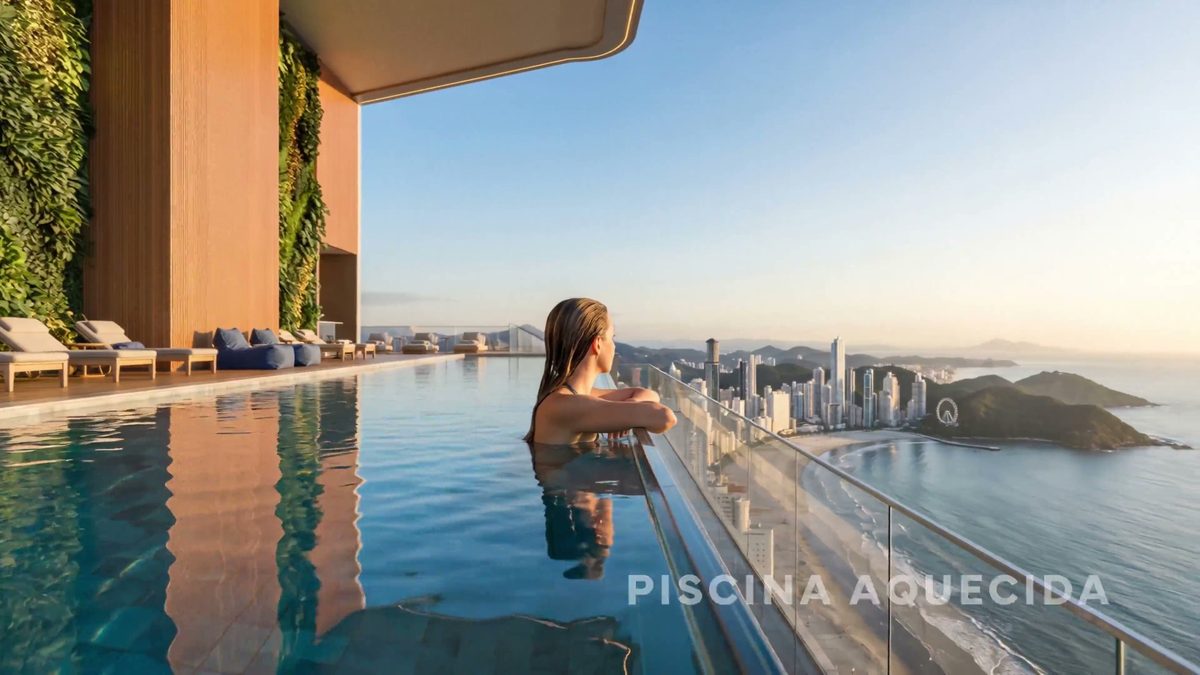
Between launch and handover, a development spends months under construction. That period communicates too, and behind-the-scenes footage is the most direct way to show it.
This is a behind-the-scenes record by Flow Prime at Harmony Ocean Front, a high-end development in Balneário Camboriú (Santa Catarina, Brazil) that is part of our portfolio. The video was produced in vertical format, opens with the title card “Bastidores — Flow Prime | Harmony Ocean Front” and has sound: it is worth watching with the audio on.
What the footage shows
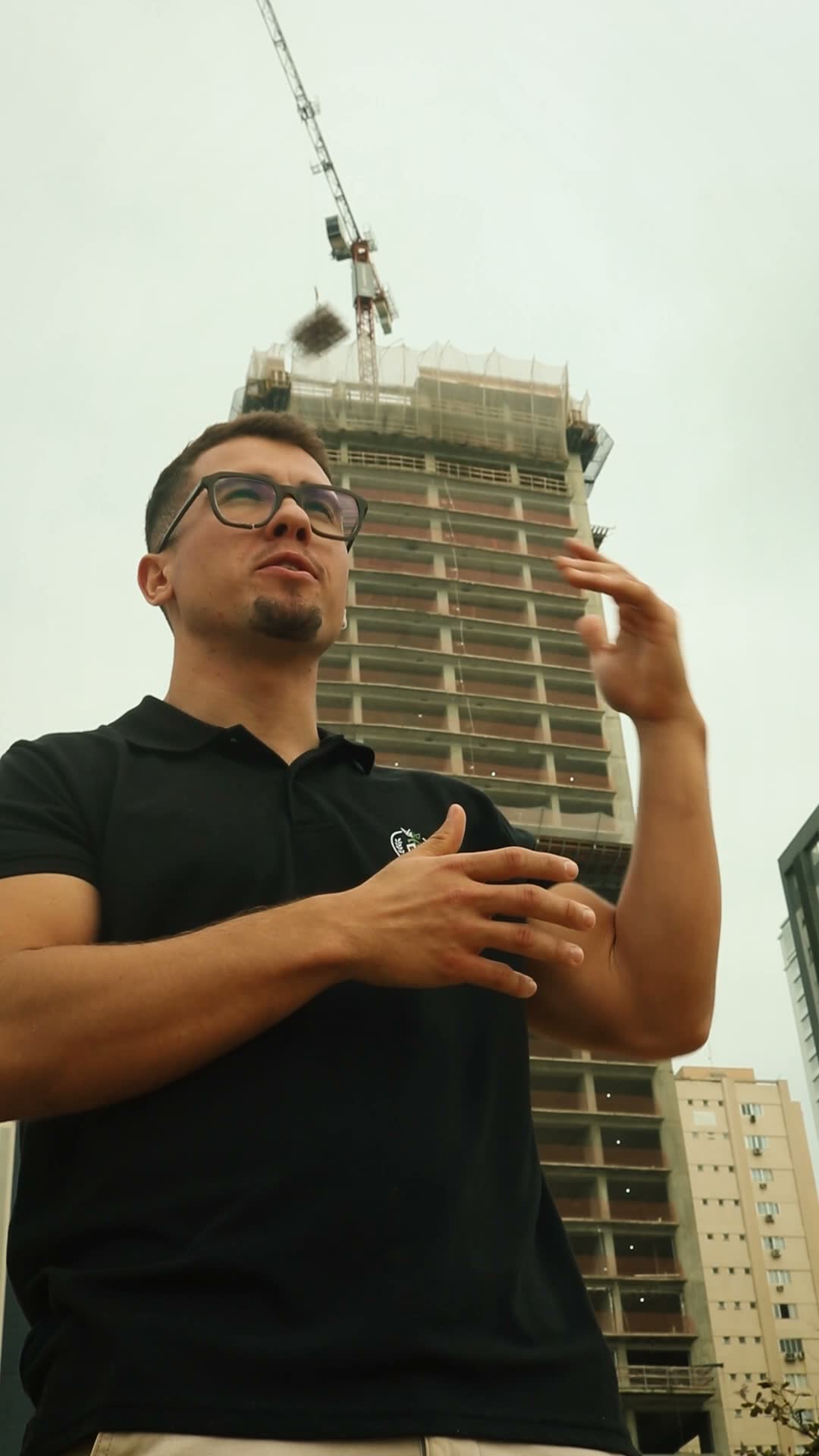
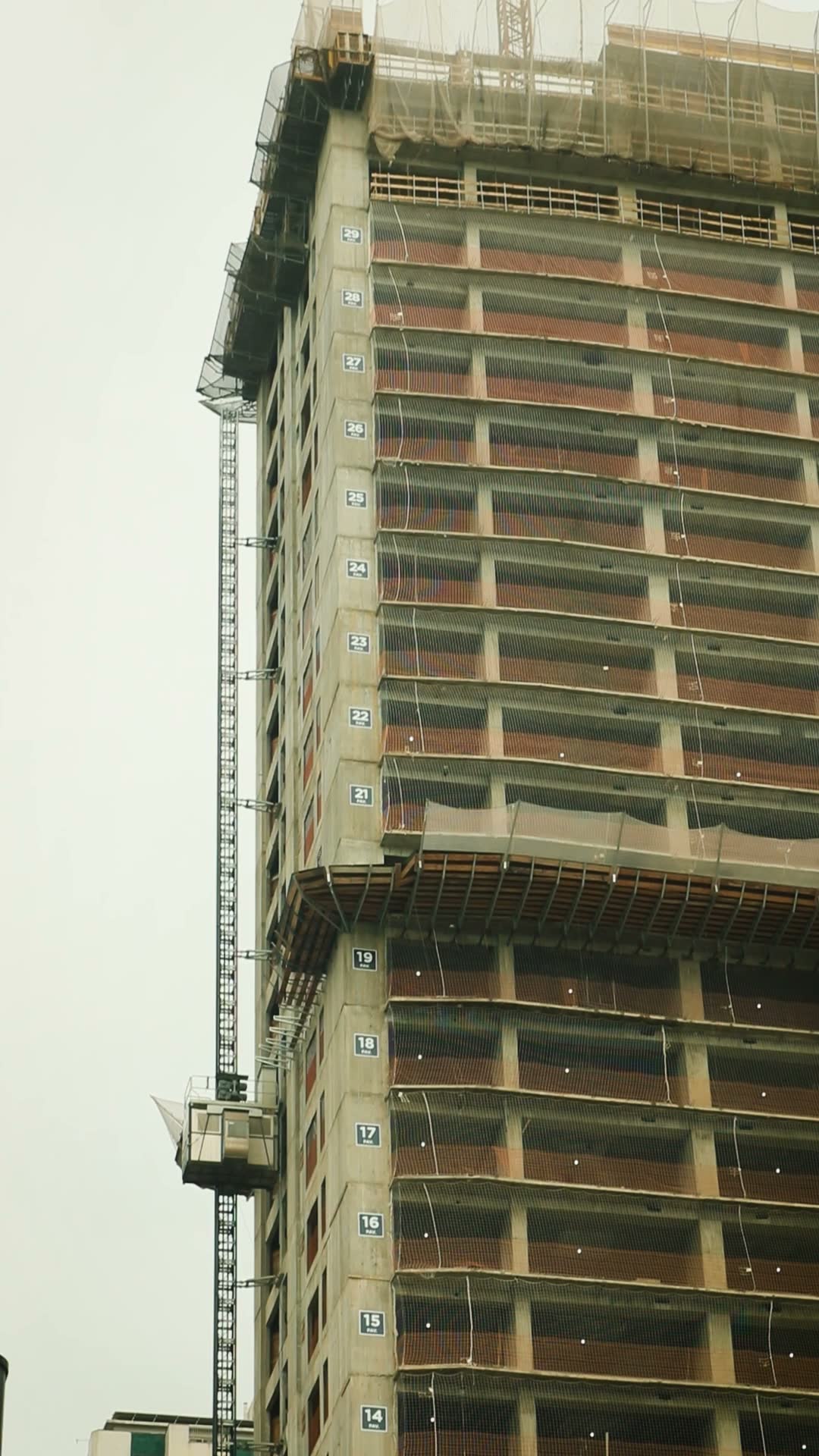
The record opens with an aerial view of the Balneário Camboriú waterfront, moves past the crane branded with the development’s name and the tower under construction, includes a conversation recorded on site and moves through the floors under construction. There is no staging of a finished building: what appears is the real stage of the works at that moment.
That choice is intentional. The launch film presents the final product, with renders, atmosphere and lifestyle. Behind-the-scenes footage shows something else: that a structure is rising, a team is working and the project is moving forward at the advertised address.
Why film behind the scenes
Off-plan buyers spend a long time waiting. In that interval, the buyer’s main question shifts from “what will it look like?” to “is it moving forward?”. Behind-the-scenes footage answers that second question with images, not promises.
- For buyers who have already signed: following the works reinforces the purchase decision.
- For those still evaluating: seeing the real structure shortens the distance between the render and the development.
- For the sales team: the material becomes a fresh reason to reconnect with leads without repeating the same launch piece.
The construction-site context
Filming a building under construction is different from filming a finished one. A construction site has safety rules, schedules, restricted areas and crews at work. That is why behind-the-scenes work starts before the camera is on: we agree with the developer which areas can be shown, when filming interferes least with the routine, and which elements must appear, such as the development’s brand on the crane.
Direction and framing
Even as a behind-the-scenes record, the material is directed. Some decisions that guide this kind of shoot:
Start with the place
The aerial view of the waterfront situates the viewer before any detail. In Balneário Camboriú, location is central to the value of a development, and the footage reinforces this in the first seconds.
Show scale
The crane carrying the development’s brand and the rising tower communicate scale and identity at the same time. It is the kind of image buyers recognize and associate with the project they bought.
Bring in people
The conversation recorded on site humanizes the works. Instead of a cold record of concrete and rebar, the video shows who is involved in the process.
Think vertical
The vertical format was chosen because this kind of content circulates mainly on phones: stories, Reels, WhatsApp. Framing for that format from the shoot onwards avoids improvised crops later.
How construction and film relate
The launch film and the behind-the-scenes footage do not compete: they work at different moments of the journey. The film creates desire before the building exists. Behind-the-scenes footage sustains trust while it is being built. When both are produced with the same visual language, buyers perceive continuity between what was promised and what is being built.
As we see it, the two formats complement each other: one builds desire, the other reinforces the trust of those following the project.
Transparency as part of communication
Showing the works requires a decision about transparency by the developer. Not every stage is photogenic, and that is part of the process. Production’s role is to find the angles that communicate progress honestly, without dressing up what is not ready yet.
The same care applies to the text that accompanies the video. Behind-the-scenes content is not the place to promise deadlines or results: it is the place to show, clearly, what is happening.
How behind-the-scenes footage can be distributed
A record like this can be used across different touchpoints, depending on each development’s strategy:
- Stories and Reels on the development’s and the developer’s profiles.
- Follow-up messages to buyers, via WhatsApp or email.
- Construction updates on the development’s website.
- Support for brokers in conversations with people who are still deciding.
The ideal frequency depends on the pace of the works. In general, it makes more sense to record visible milestones, such as structure, façade and common areas, than to produce content with nothing new to show.
What a good behind-the-scenes record needs
- Clear location: viewers need to understand where the development is within the first seconds.
- Project identity: brand, façade or recognizable elements that connect the site to the advertised product.
- Visible progress: structure, floors, façade or common areas that show the real stage.
- Human presence: crew, engineering or conversations that give context to what is being built.
- Careful sound: when there is speech, the audio must be intelligible; when there is not, the soundtrack should follow the rhythm of the images.
- The right format: vertical for phones, with framing that works without improvised crops.
Common mistakes in construction videos
A few precautions keep behind-the-scenes footage from working against the development. The first is showing the works without context: unidentified images of concrete and rebar look the same on any site. The second is overdoing the pace, with fast cuts that stop buyers from understanding what they are seeing. The third is using the footage as an aggressive sales piece, with promises about deadlines or appreciation that do not belong in this kind of content.
It is also worth watching what appears in frame. Disorganized areas, safety equipment used incorrectly or details that will still be redone can raise unnecessary doubts. Good direction chooses what to show without hiding the reality of the works.
From behind the scenes to the handover film
Recording the works also sets up the end of the story. When the development is handed over, behind-the-scenes footage helps tell the path from launch to keys in hand: what was a render became a structure, and the structure became an address. That arc is valuable for the developer when presenting future launches with concrete proof of delivery.
What we learned
Filming behind the scenes with the same care as the launch film changes how the works are perceived: the construction site stops being just a waiting period and becomes part of the development’s story. See the five stages of our process or explore the Harmony project and the full film.
To bring this work to your development, see the Flow Prime real estate films service.