The role of AI in a real estate film is not to change the design. It is to amplify what the design can convey.
It is one of the questions developers ask us most often when we present a hyper-realistic film: “can artificial intelligence change my project?”. The honest answer is that it can, if nobody controls the process. That is why Flow Prime’s work is organized so that technology works in favor of the design, and never on its own. The video above shows this side by side.
What the video shows
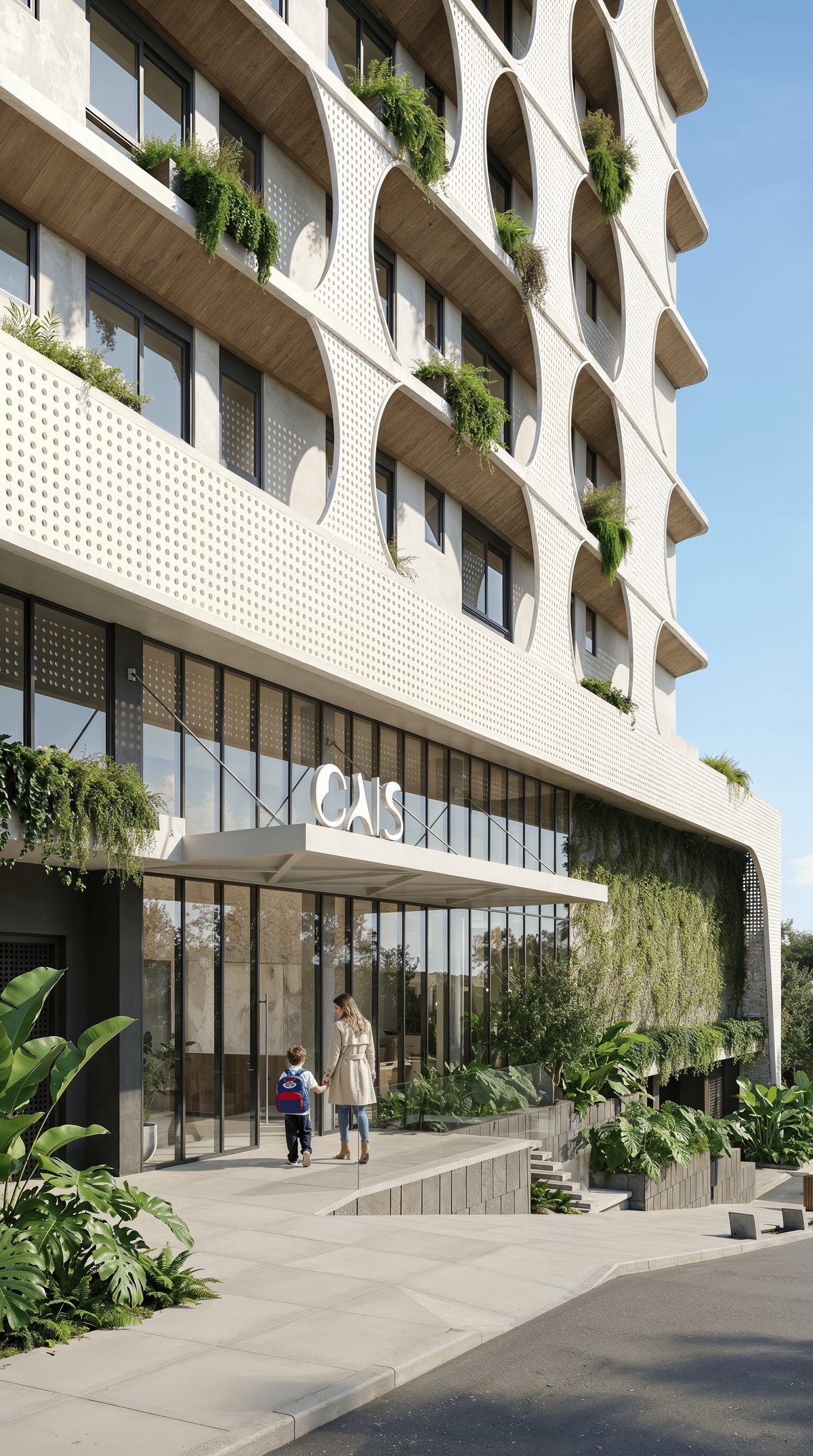
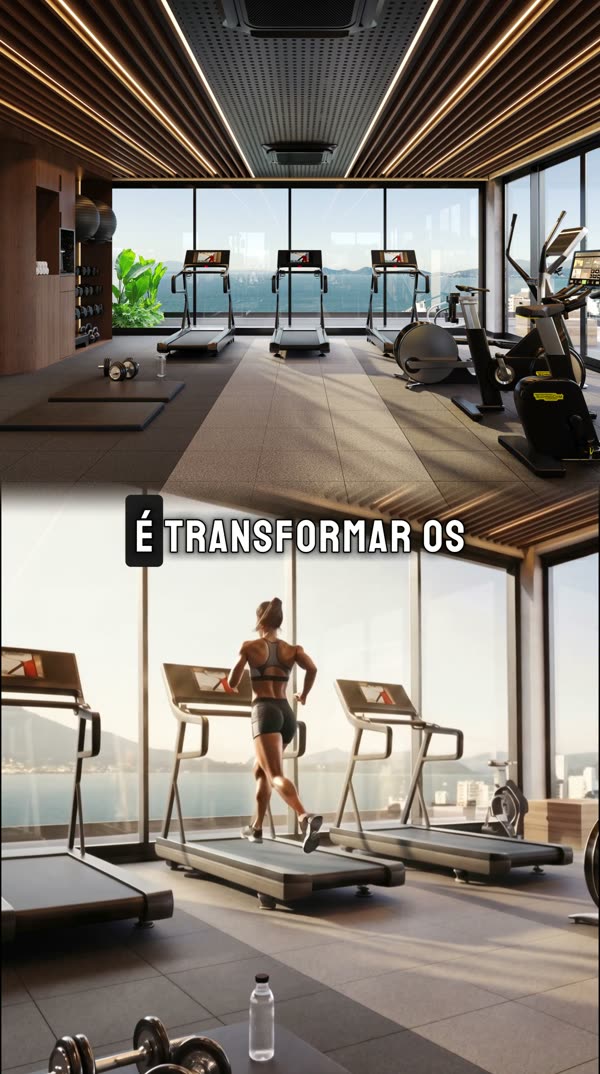
At the top are the renders we received for CAIS, a development by NOVA Empreendimentos. At the bottom are the hyper-realistic videos we created from those same renders. Sports court, lobby with a sculptural staircase, pool, facade, gym and spa appear in both versions, with the same framing.
The direct comparison is the clearest argument. Volumes, openings, finishes and furniture follow what the design defined. What changes is the feeling: light gains direction and warmth, people give the spaces scale and use, and the camera movement guides the eye to where the buyer will want to be.
Our job is to turn renders into a more realistic, cinematic simulation.
Why the question makes sense
Generative image and video tools are trained to produce plausible results, not to respect a specific floor plan. Without a reference and without review, they tend to “fill in” what they do not understand: they add a floor, change the design of a railing, swap one floor finish for a similar one or place a window where there was a wall.
In a generic advertising piece, this may go unnoticed. In a development sold off-plan, it does not. What appears in the film becomes the buyer’s expectation, and that expectation has to match what will be built. That is why we treat AI as a visual finishing stage on top of a closed technical base, and not as the source of the images.
Everything starts with the technical base
Before any scene, we gather the material that defines the project: floor plans, sections, elevations, approved renders, the finishes specification and the developer’s references. That set is the production’s source of truth. When two materials disagree, the question is settled with the client before production, and never “decided” by the tool.
The client’s renders, when they exist, are the safest starting point, because they have already been approved by the architect and the developer. In the case of CAIS, every scene of the film was born from a render we received, and that is exactly the relationship the video makes visible.
What we check in every scene
The comparison with the base happens scene by scene, always with the reference image next to the result. These are the points we look at, because they weigh most in the buyer’s perception:
- Massing and siting: height, number of floors, setbacks and the building’s relationship with the street and its surroundings.
- Openings: number, proportion and position of windows, doors and frames, which are usually the first elements to drift.
- Materials and finishes: color, texture and layout of floors, facades and panels, according to the specification and the renders.
- Landscaping: planters, larger species and the use of the green areas foreseen in the design.
- Furniture and layout: how the spaces are arranged and the pieces that define how each one is used.
- Lighting: light can add atmosphere, but it cannot hide or invent architectural elements.
- Human scale: people and objects need consistent proportions, so a space does not look larger or smaller than it is.

Where AI comes in and where it does not
The technology is used for what it does best: realistic light and materials, texture, atmosphere, movement and the presence of people. That is what turns a correct image into a scene that makes people want to be there, and that is why it is worth using in a launch.
It does not decide the architecture. It does not define the number of floors, the facade design, the layout of the spaces or the finishes. When a result changes any of these points, the scene is corrected or redone. For elements that are part of what will be delivered, “almost the same” is not acceptable.
Human control at every stage
Every scene is reviewed by people who know the project. We start from the reference image instead of describing the space from scratch, we review the moving sections frame by frame, which is where changes usually appear, and the client validates the result before delivery, with the reference alongside it.
This does not mean promising absolute perfection. Generative tools can introduce small variations, especially in very fine details or long camera moves. The difference lies in actively looking for those variations and deciding carefully what is acceptable visual language, like a reflection or a leaf in the wind, and what has to be corrected because it represents the design.
Errors worth knowing about
Knowing where errors show up is what makes it possible to find them. These are the most common in AI-generated images and videos:
- Repeated elements that change in number: balconies, columns, light fixtures and steps.
- Fine details: railings, window frames and trims that get simplified or change shape.
- Textures in motion: surfaces that “slide” or lose their pattern during the shot.
- Text and signage: signs and logos that get distorted and need to be rebuilt.
- Objects that appear or vanish: furniture or plants that change from one frame to the next.
A checklist to evaluate any AI film
If your company is evaluating a film made with AI, with Flow Prime or with any other supplier, these questions help separate visual impact from risk:
- Does production start from your renders and floor plans, or from generic descriptions?
- Is there a side-by-side comparison between the reference and the result, scene by scene?
- Who reviews fidelity, and with which technical material at hand?
- Are the changes found corrected before delivery?
- Do you receive the material to approve before it is published?
- Do the pieces make clear what is an illustrative image and what is a project specification?
Why this matters commercially
Trust with the buyer starts with the first image. A faithful film protects the sale, the developer’s reputation and the work of the sales team, who do not have to explain differences between what was shown and what will be delivered.
At the same time, a film that is merely correct does not move anyone. The goal is to combine both: desire and fidelity. That balance is what the CAIS video makes visible and what we pursue in every project. You can see the full development on the CAIS project page.
To bring this work to your development, see the Flow Prime architectural visualization service.