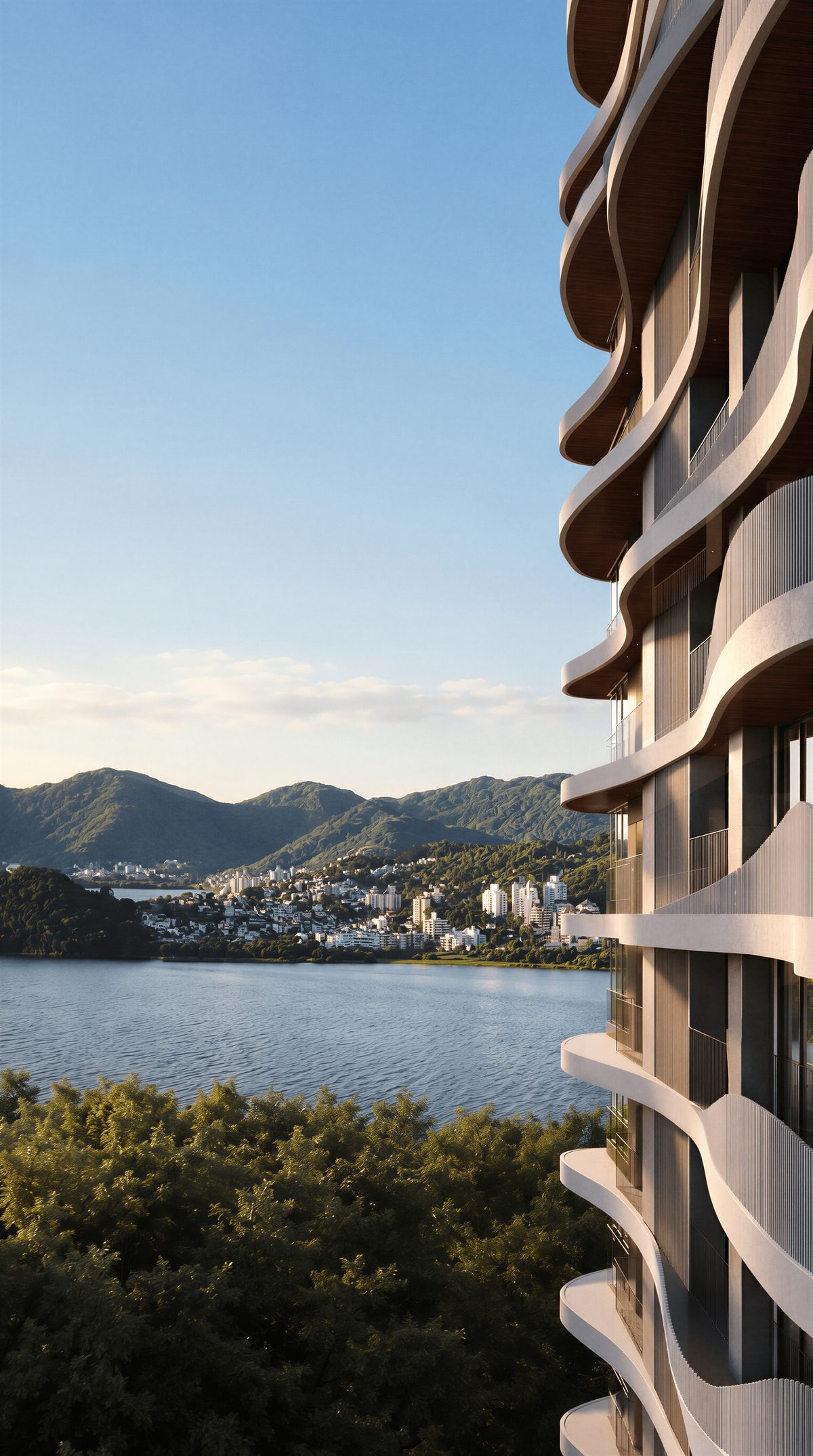
The film is not a single piece. It is the raw material for everything the buyer will see until signing.
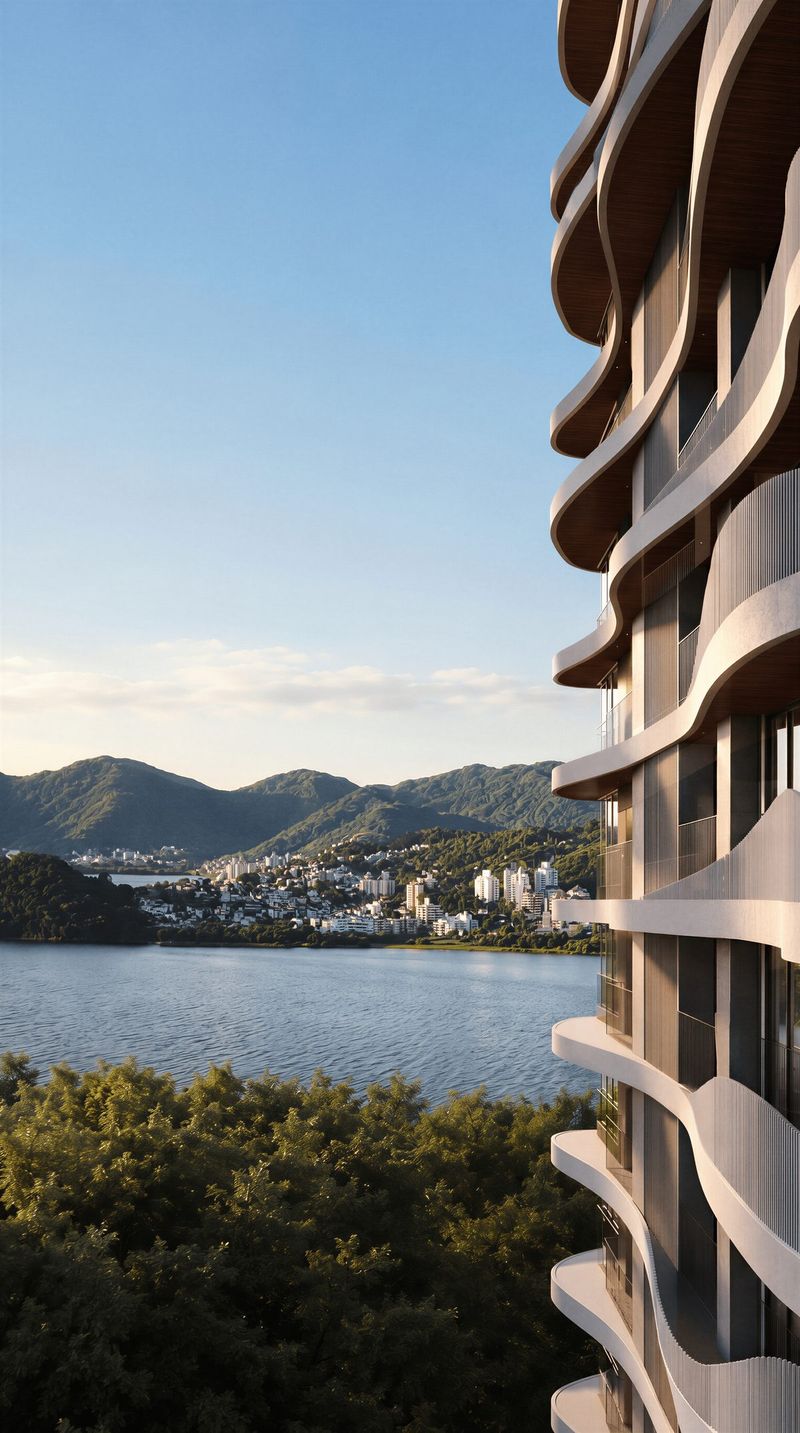
The excerpt above is the opening of the AURA film, a development in Santa Catarina, Brazil, from the Flow Prime portfolio, produced in vertical format. The question we ask on every project is: at how many moments of the journey will this material appear, and in what format does it need to be at each of them?
The buyer’s journey has many touchpoints
Between the first ad and the signature, buyers move through very different channels. Each one calls for its own cut, aspect ratio and length. Below, we organize these touchpoints into three moments.
Discovery: getting the right attention
This is where buyers come across the development for the first time, usually without looking for it.
Instagram Reels and social media
Vertical format, a few seconds to hold attention and frequent viewing without sound. The opening has to work on its own: the first image matters more than any text.
YouTube
It accepts longer, horizontal versions, and it is where the full film usually makes the most sense for people who have already shown interest.
Meta Ads, Google Ads and YouTube Ads
In paid ads, the same narrative is split into short pieces with different messages for different audiences. One version may highlight location; another, the common areas; another, the floor plans.
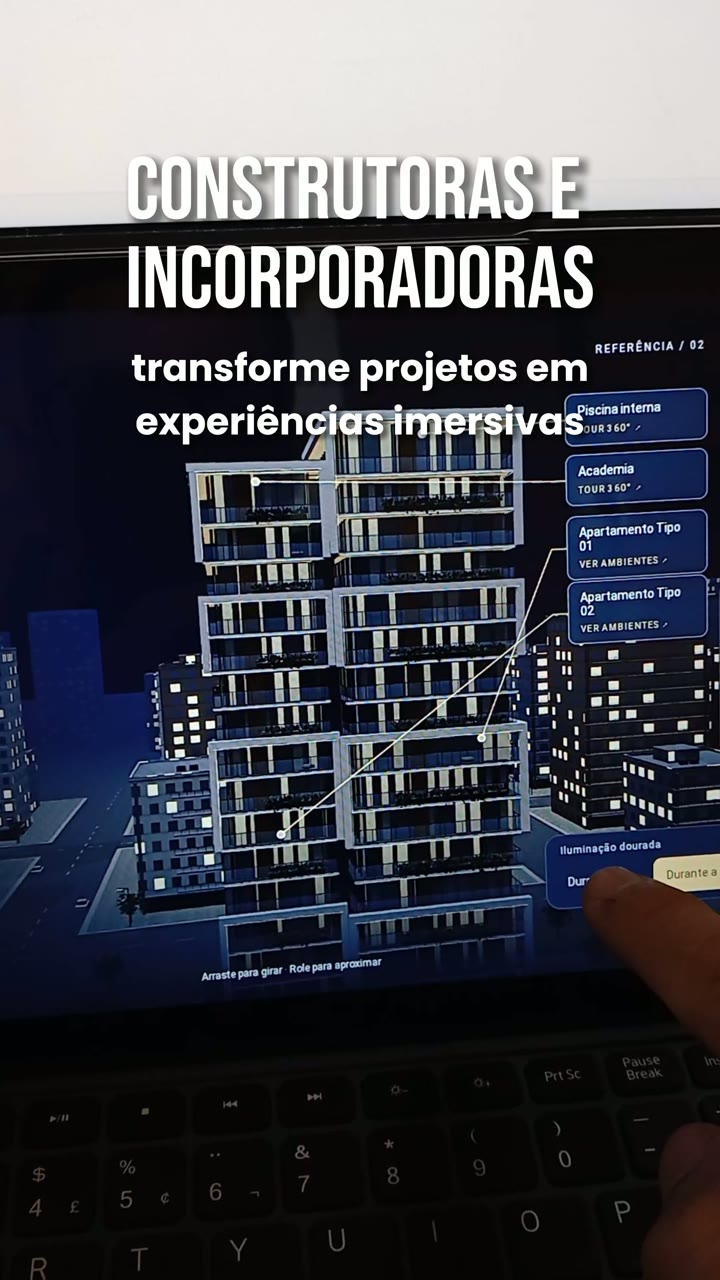
The video above is an example of Flow Prime’s own vertical ad creative. It shows the logic of the format: a strong opening line, images that support the argument and a clear call to action at the end.
Consideration: deepening the decision
After the first contact, buyers want to understand the product. Here the film gets more space and time.
Development website
The full film, the common-area scenes and the floor plans help people who want to study the project calmly. It is also where versions of different lengths are worth having.
Sales stand
At the stand, the film accompanies the conversation with the broker. Looping versions that do not depend on sound work well on screens that stay on all day.
LED panels and digital billboards
Large-format screens call for few scenes, strong impact and a reading time of seconds. Short copy and images of the façade or location usually work better than detailed interiors.

Decision: supporting the sales conversation
In the final stretch, the film stops being an ad and becomes a sales tool.
Short, light versions that are easy to send and watch on a phone help brokers reopen a conversation or answer a specific question.
Sales presentation
In meetings, selected scenes from the film illustrate the arguments of the presentation: location, differentiators, units.
Negotiation support
During negotiation, visual material helps keep desire alive while terms are discussed. A scene of the view or the leisure area, at the right moment, reminds the buyer why they became interested.
Email and follow-up
Follow-up sequences can use excerpts from the film to stay in touch without repeating the same message every time.
Planning formats from production onwards
When formats are defined in the brief, shooting and editing already anticipate vertical cuts, short versions and scenes that work without sound. That is more efficient than adapting a finished film afterwards, and the result is more consistent: each version feels designed for its channel rather than cropped from the main film.
- Framing: scenes composed to work both horizontally and vertically.
- Length: the main version, 30- and 15-second versions and even shorter cuts for ads.
- Sound: pieces that work with and without audio, with supporting text when needed.
- Message: each version with one main argument, instead of trying to say everything.
A good launch film is planned as a system: one central narrative and several versions, each in the right place of the journey.
Common mistakes when cutting a film into versions
- Cropping horizontal to vertical without replanning: the façade falls out of frame, text gets small and the scene loses meaning.
- Using the same piece on every channel: what works on YouTube rarely works in a six-second ad.
- Relying on audio: on social media, many people watch on mute; the message also needs to be in the image.
- Versions with no next step: each piece should say what to do next, whether visiting the website, talking to a broker or visiting the stand.
- Unreadable text: small type on phone screens or on panels seen from a distance loses the message.
How to track what each format does
Each channel has its own indicators, and it pays to combine them to understand the role of each version. In ads and social media, we look at reach, retention in the first seconds and completion rate. On the website, time on page and clicks to contact. In sales, the conversations started from each piece of material. These numbers are not for comparing channels with one another, since each plays a different role in the journey; they are for adjusting versions, cuts and messages throughout the launch.
Consistency across channels
When every piece comes from the same film, buyers recognize the development at any touchpoint: the same façade, the same atmosphere, the same identity. That consistency strengthens the development’s brand and keeps each channel from looking like a different campaign.
What we learned
The value of the film grows when it follows the buyer from the ad to the negotiation. On the home page, the “Pillars” section illustrates these formats. Explore the AURA project and the full film or Flow Prime’s services.
To bring this work to your development, see the Flow Prime real estate films service.