A real estate film does not start with the camera. It starts with a question: what is this development’s signature?
AMICI Residenze is a development by Grupo D’Agostini and Grupo Pegoraro in Joaçaba, Santa Catarina, Brazil. In the video above, Gabriel, from Flow Prime, explains the focus of the hyper-realistic film: to convey the project’s signature, which the development itself sums up as Milan’s sophistication in the heart of Joaçaba.
This piece shows how that idea turned into concrete decisions about color, light, music, pace and direction, and why those decisions change how a buyer feels about a development before it exists.
The starting point: a signature
Every well-positioned development has a concept. The film’s challenge is to make that concept felt, not just stated. A text can claim a project is sophisticated; the film has to make the viewer perceive that sophistication through light, pace and sound, without reading anything.
At AMICI, the reference was clear: Milan. Not as a set to be copied, but as a way of living. Elegance without excess, warm materials, gatherings around the table, music as part of daily life. The name itself, which means “friends” in Italian, points to that shared life.
From the developer’s material to the script
Reading the concept starts with the developer’s material. As Gabriel says in the video, anyone who knows the AMICI book sees a strong connection with the idea of hosting well and living well: the leisure areas were designed to receive visitors, friends and family, and to enjoy those moments together.
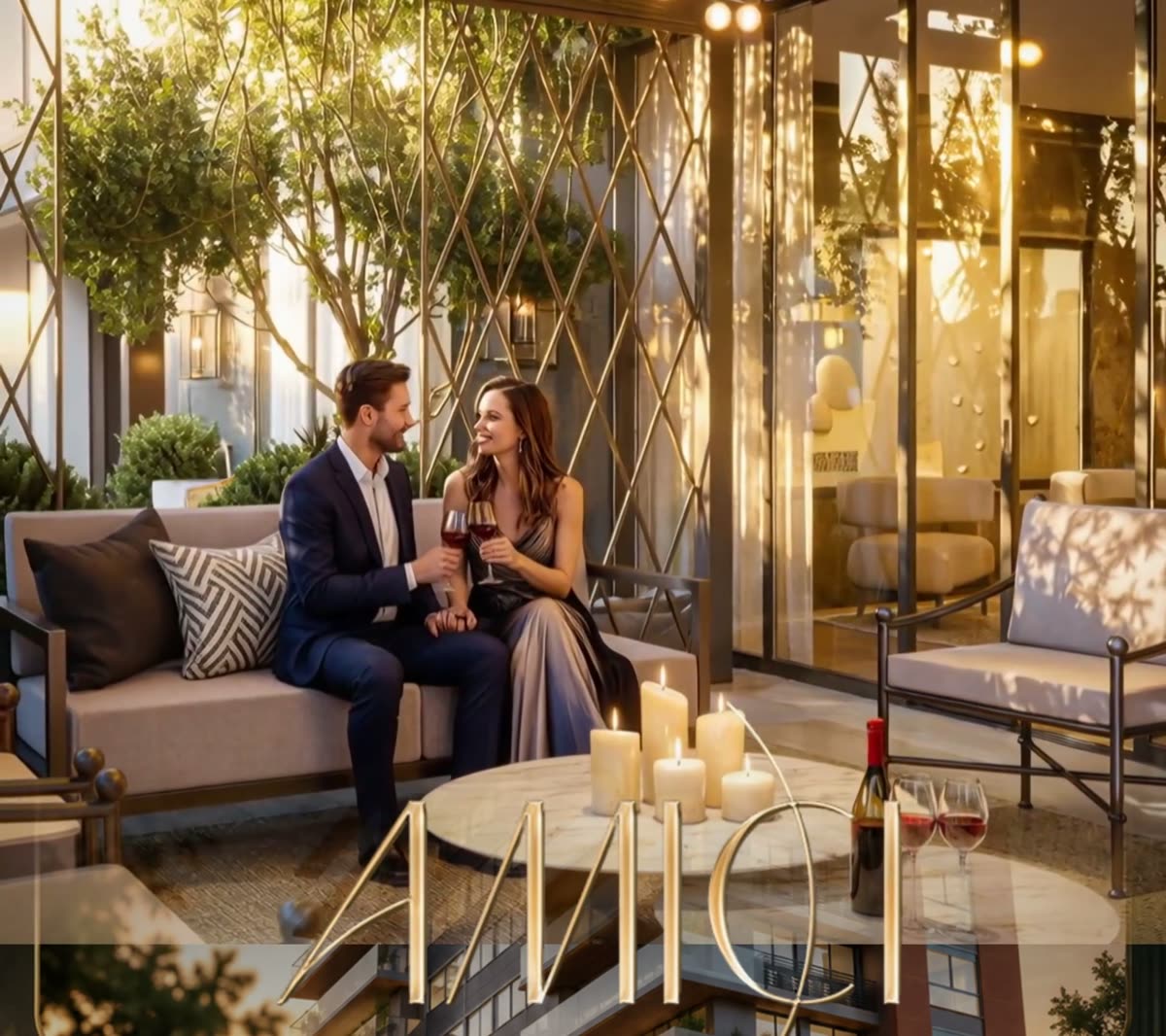
That reading becomes the script. Instead of presenting the shared areas as a list of amenities, the film shows them in use: people on the terrace at the end of the day, a family gathered at the table, children in the play area, the game room in use. Each space answers the same question: what does living well look like here?
Color and temperature
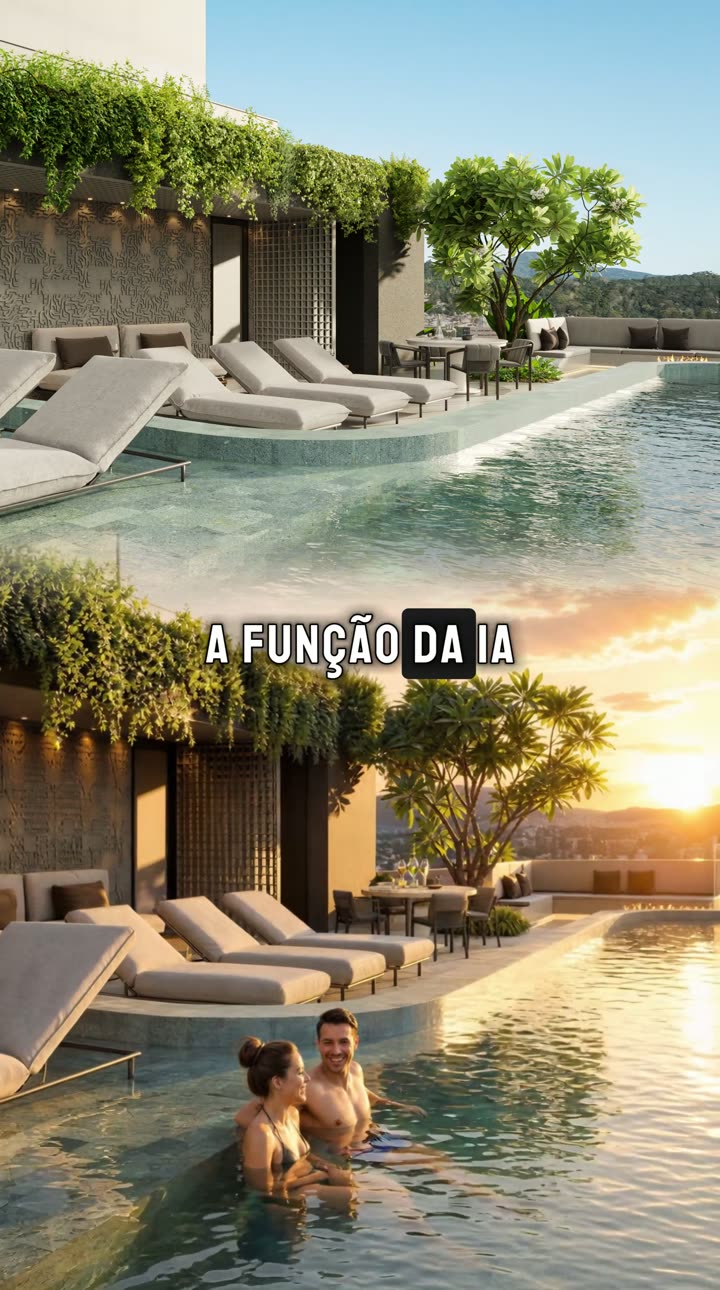
The first visual translation of the concept was the palette. The film works with warmer colors, dominated by golden tones, wood, beige and late-afternoon light. The choice speaks to the Italian reference and to the sense of welcome the development wants to convey.
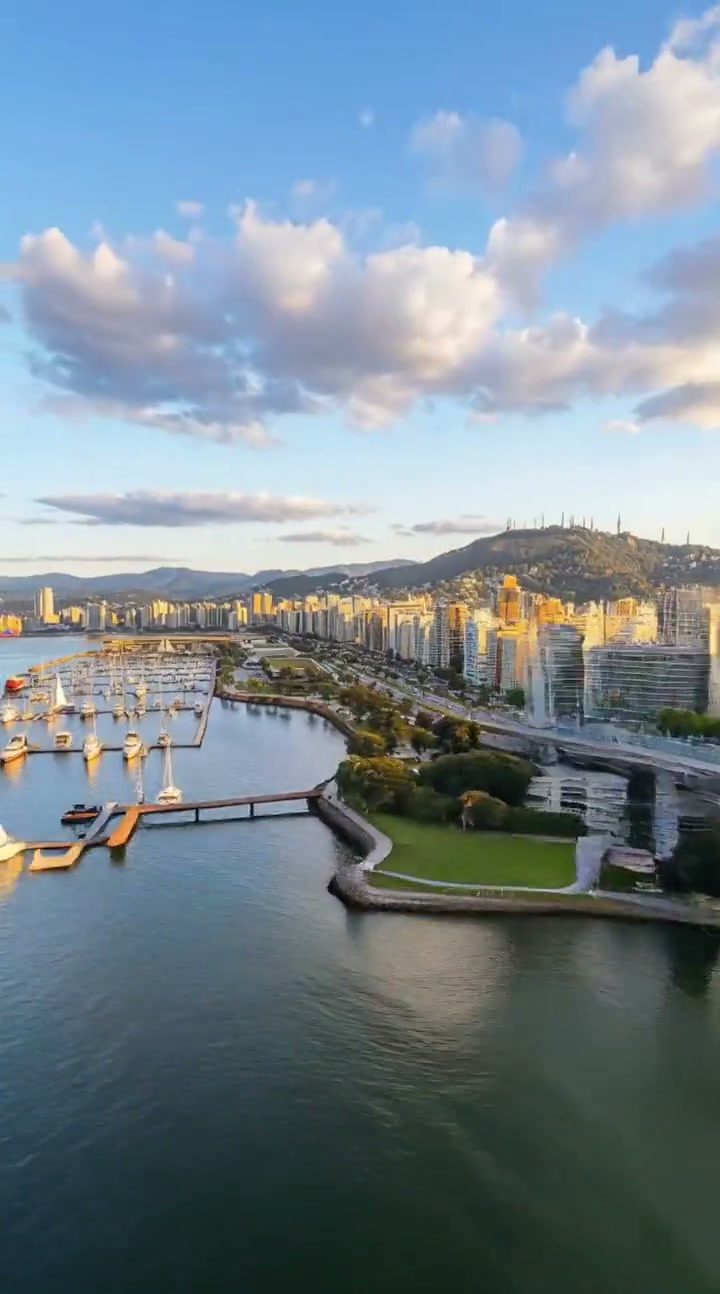
Color temperature is not a technical detail. It changes how a space feels before any conscious reading. A cool palette tends to communicate precision and modernity; a warm one communicates comfort, togetherness and permanence. At AMICI, the choice stayed consistent in every scene, from the aerial view of the city to the interiors.

Light and texture
Along with color, the film seeks a more luminous texture. Light comes in through the openings, shapes the materials and creates a glow on surfaces. It is light that gives a scene the quality of something lived in, not just modeled.
That care is what sets a hyper-realistic film apart from a sequence of renders. The spaces are still the ones in the design; what changes is how light reveals wood, stone, fabric and metal, and how the viewer feels inside them.
The score: piano and violin
Music is the layer viewers notice least consciously and the one that most shapes emotion. At AMICI, the score was built on violin and piano at certain moments, to connect the film with Milan, with Italy and with the sophistication the project proposes.
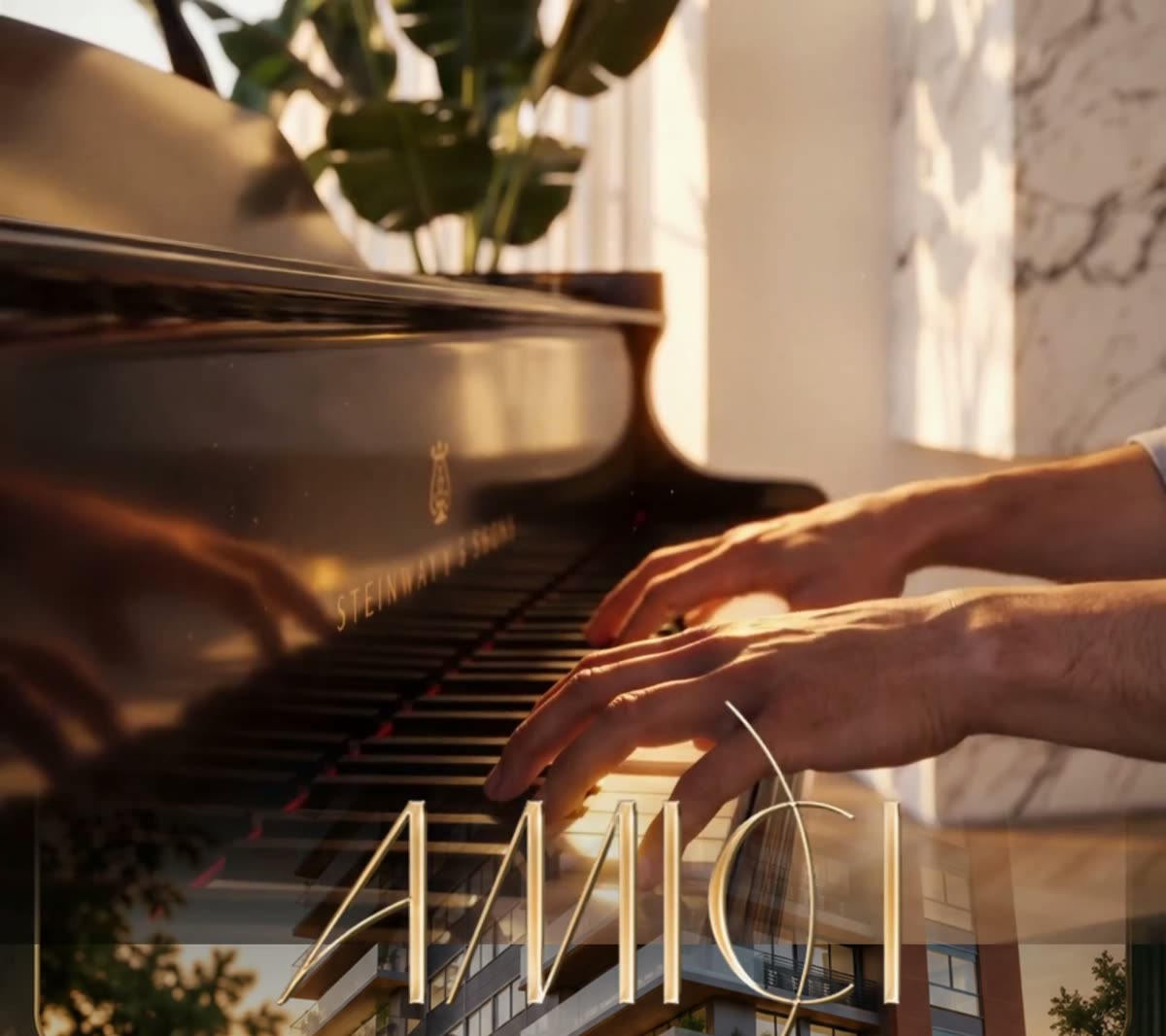
Choosing classical instruments has a direct effect: it slows down the eye. Instead of the fast beat common in social media videos, the score invites viewers to look at the spaces calmly, like someone visiting a place with time to spare. The piano also appears in the image, in one of the scenes, linking what you hear to what you see.
Pace, camera and editing
Concept, color and score only work together if the pace follows. The edit alternates wide shots, which place the development in the city, with close shots of details and people. Camera moves are smooth and continuous, in tune with the music.
The order of the scenes also tells a story: the city, the building, the arrival and then life inside. It moves from context to intimacy, which helps buyers picture themselves living there.
Hosting well, living well
The human use of the spaces was one of the film’s pillars. As Gabriel explains, the immersion sought to connect with living well and hosting well. That is why people do not appear only to give scale: they show how each space is lived in.
- Togetherness: a set table, conversation on the terrace, friends meeting up.
- Family: shared meals and children enjoying the leisure areas.
- Well-being: moments of pause, rest and self-care.
- Leisure: a game room and shared areas in use, not just photographed.
Consistency and differentiation
The result is a recognizable film. Anyone who watches the AMICI film will not mistake it for another development, because color, light, music and pace all point to the same idea. That consistency is what turns a set of beautiful images into an audiovisual language of its own.
In markets with many launches at the same time, that differentiation matters. Buyers see dozens of similar videos; a film with a clear signature is more likely to be remembered and linked to the right development.
Commercial use
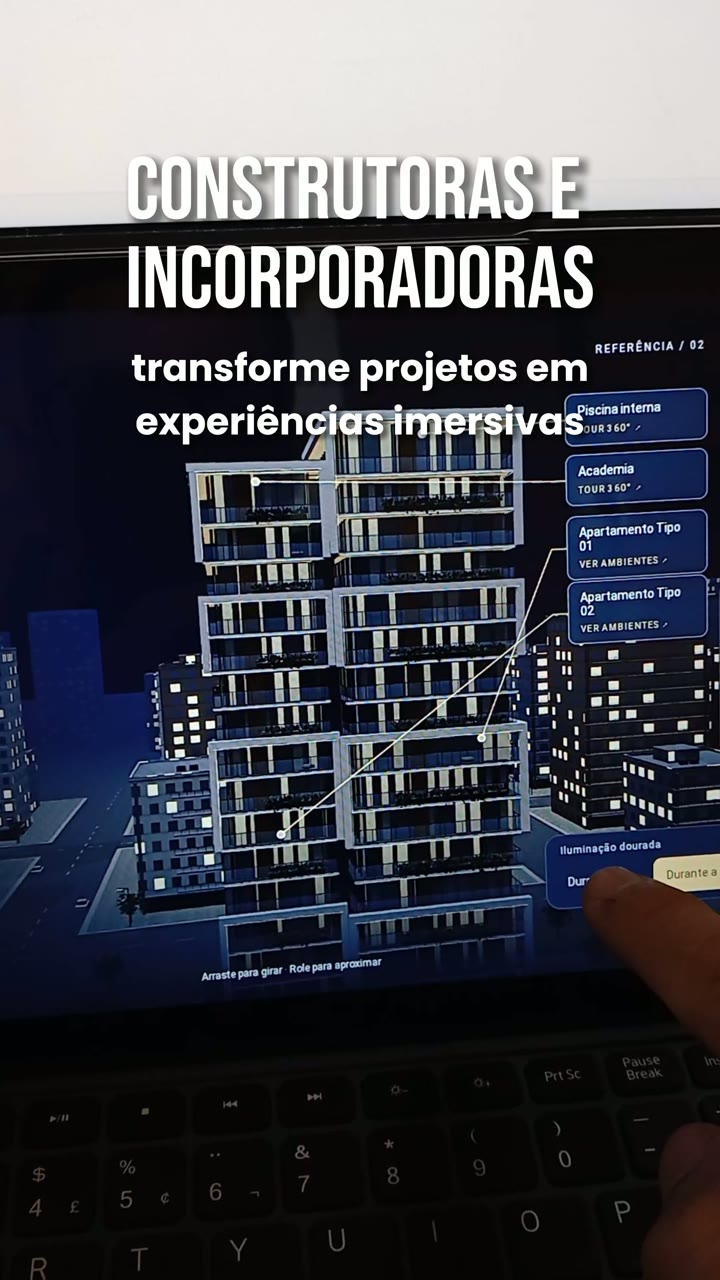
A film built from the concept works across the whole sales journey. It opens the campaign, supports the sales gallery, goes with the broker into WhatsApp conversations and is the base for cuts in different formats. As AMICI shows, Flow Prime also uses behind-the-scenes videos like this one, where Gabriel explains the development, to present the thinking behind the production.
Flow’s main focus on this development was precisely to convey that signature.
What to take to your own development
Before thinking about camera and effects, it is worth answering a few questions:
- What is the development’s signature, in one sentence?
- Which cultural, place or lifestyle references does it evoke?
- Which color palette and kind of light translate that reference?
- What music would make the viewer feel the concept without reading anything?
- Which spaces need to appear in use, and with whom?
- In what order do the scenes tell the story, from context to intimacy?
The answers to these questions are what guide a film like AMICI’s.
To bring this work to your development, see the Flow Prime strategy and scriptwriting service.